
History
FOUNDING OF APSMV
Tracing the origins and development of APSMV and the people who shaped its foundation.
The Asia Pacific Society of Medical Virology (APSMV) was established in 1994 through the amalgamation of the Asia-Pacific Congress of Medical Virology (APCMV) and the Asian Group for Rapid Viral Diagnosis, following a proposal by the late Associate Professor Chan Yow Cheong. This brought together existing regional efforts in medical virology into a single society with a more formal structure for scientific exchange and collaboration across the Asia-Pacific region.
The Society was initiated principally by Chan Yow Cheong, John Mackenzie, and Lam Sai Kit, with support from virologists from Japan, Indonesia, Sri Lanka, India, Hong Kong, Thailand, and Korea. From the outset, APSMV was intended to serve as a regional network for medical virologists, promoting cooperation, collegiality, and the sharing of knowledge across countries in the Asia-Pacific.
A central activity of APSMV was the Asia-Pacific Congress of Medical Virology, which served as the Society’s major scientific meeting. These congresses provided a forum for researchers and clinicians to present new findings, discuss important developments in virology, and strengthen regional scientific links. Over time, APSMV grew into a substantial regional organisation, reaching more than 400 members from 20 countries at its peak. The Society also produced several issues of its newsletter, which helped maintain communication among members and document Society activities.
The early history of APSMV reflects the strong commitment of its founders to building a durable regional community in medical virology. Their efforts created an enduring framework for professional interaction among virologists in the Asia-Pacific and laid the foundation for the Society’s ongoing legacy.
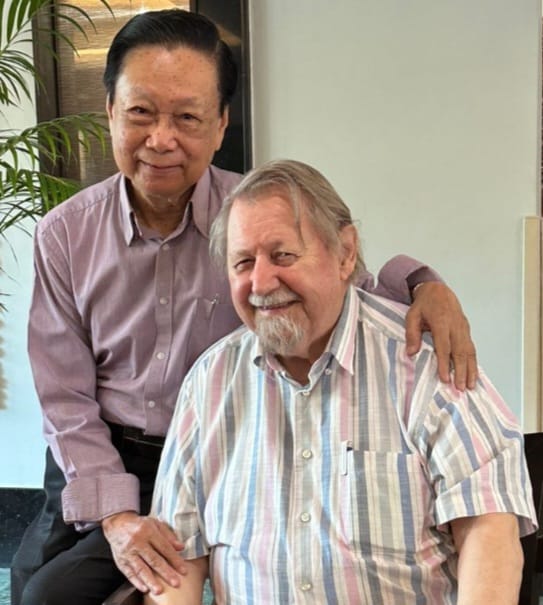
APSMV founding leaders, Professor Lam Sai Kit and Professor John Mackenzie
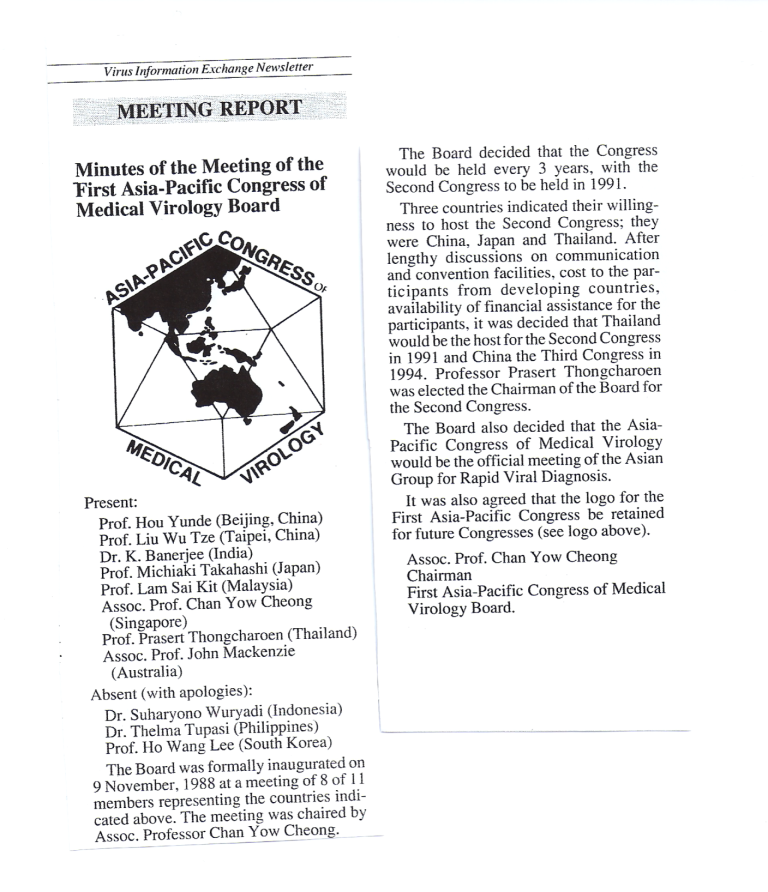
An undated article from Virus Information Exchange Newsletter